


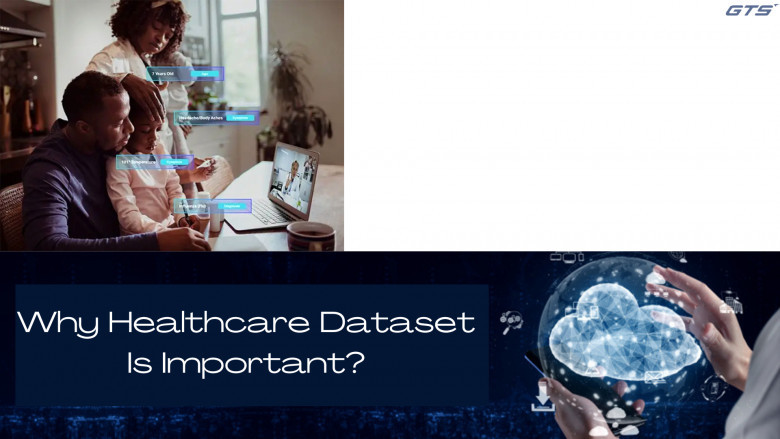
In all aspects of our life, there is a growing need for sophisticated data-driven solutions. Medical imaging, autonomous driving, smart homes, and many more sectors have applications in AI. Large volumes of AI Training Datasets like medical datasets are required for such systems to function effectively and reliably.
Data procurement has always been an organizational priority. More so when the concerned data sets are used to train autonomous, self-learning setups. Training intelligent models, especially the ones that are AI-powered, takes a different approach than preparing standard business data. Plus, with healthcare being the vertical of focus, it is important to focus on data sets that have a purpose to them and aren't simply used for record-keeping.
But why do we even need to focus on training data when gargantuan volumes of organized patient data are already residing on medical databases and servers of retirement homes, hospitals, medical clinics, and other healthcare organizations. The reason is that standard patient data isn't or cannot be used to build autonomous models, which then require contextual and labeled data to be able to take perceptive and proactive decisions in time.
There is no doubt that machine learning has the potential to revolutionise the healthcare business. The possible applications are diverse and cover the full medical imaging life cycle, from image production and analysis to diagnosis and outcome prediction. However, medical practitioners face plenty of challenges that prohibit them from successfully using AI technology in clinical practice. In this article, we will discuss medical data annotation and more.
Data from Synthetic X-rays
The procedure of simulating artificial X-ray datasets based on real physics is simple. In general, an x-ray source directs x-rays toward a detection plate. Our X-rayed individual is sandwiched between the source and the detector. The tissues attenuate x-rays as they move through our bodies. Each type of tissue, such as muscles, fat, etc, has a particular attenuation constant. As a result, depending on the type of tissue and the amount of tissue between the source and the detector, the image shows a variable shade of grey. Various papers provide typical attenuation coefficients for various tissues.
On a consumer-grade laptop, simulating such pictures takes only a few seconds, fast simulations, along with automatically changing models, enable the simulation of vast, diverse Text Dataset. Even more importantly, the artificial data can be automatically annotated. This has various benefits:
- The truth is completely known
- Rapid and low-cost
The annotation style is adaptable and determined by your application. The following image (from left to right) depicts three distinct styles:
- X-ray simulation without annotation
- As a single annotation, each vertebral body and its processes
- Just the vertebral bodies
- Each vertebra and its processes are annotated separately.
Why Healthcare Training Data is Important?
As seen from the nature of models, the role of machine learning is incrementally evolving when the healthcare domain is concerned. With perceptive AI setups becoming absolute necessities in healthcare, it comes down to NLP, Computer Vision, and Deep Learning for preparing relevant training data for the models to learn from.
Also, unlike the standard and static processes like patient record keeping, transaction handling, and more, intelligent Healthcare models like virtual care, image analyzers, and others cannot be targeted using traditional data sets. This is why training data becomes even more important in healthcare, as a giant step into the future.
The importance of healthcare training data can be understood and ascertained better by the fact that market size concerning the implementation of data annotation tools in healthcare to prepare training data is expected to grow by at least 500% in 2027, as compared to that in 2020.
But that's not all, intelligent models that are properly trained in the first place can help healthcare setups cut additional costs by automating several administrative tasks and saving up to 30% of residual costs.
GTS and AI Training Dataset
It is usually a good idea to begin by collaborating with a company that has previously committed the time and effort required to comply with the numerous data formats, regulatory regulations, and user experience essential for a successful medical AI project. Global Technology solutions are one of them. We have the required expertise and experience in collecting and annotating medical datasets and also offers the Speech Transcription service.


